Private Ivor Harrington Murray
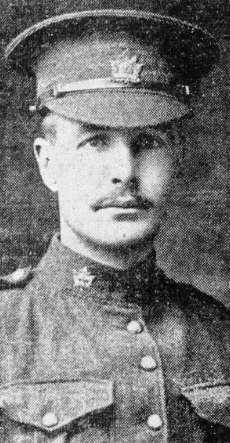
Ivor Murray was born in Moncton, New Brunswick on October 24, 1889. He was the son of Albert and Alice Murray, and was the first man who enlisted from Paris to fall on the battlefield during the First World War. Ivor came to Paris about 18 months before he enlisted to work as a bank clerk at the Bank of Montreal. He attended Paris Presbyterian Church. He was a member of the Citizens’ Band who played at the memorial service held in honor of his sacrifice.
Ivor belonged to the Dufferin Rifles when the war broke out. He was single and 25 years old when he enlisted with the 4th Battalion. He later qualified as a signaler and was then attached to the signaling section of his battalion. Ivor was killed in action in the Belgian town of St Julien on April 23, 1915. In April 1915, the small Belgian town of St. Julien became a focal point of the Second Battle of Ypres, infamous for the first large-scale German poison gas attacks on the Western Front, which devastated inexperienced Canadian troops who suffered immense casualties while desperately holding the line. On April 22, Germans released a massive chlorine gas cloud which drifted into French colonial lines, creating a huge gap. The Canadians, holding the right flank, were pushed forward to fill this dangerous breach. Despite being overwhelmed and facing chemical warfare, Canadian soldiers fought ferociously, creating makeshift defenses and preventing a total German breakthrough. Lance Corporal Fisher earned Canada's first Victoria Cross for single-handedly defending a machine gun position against attackers in St. Julien on April 22nd, though he was killed the next day.
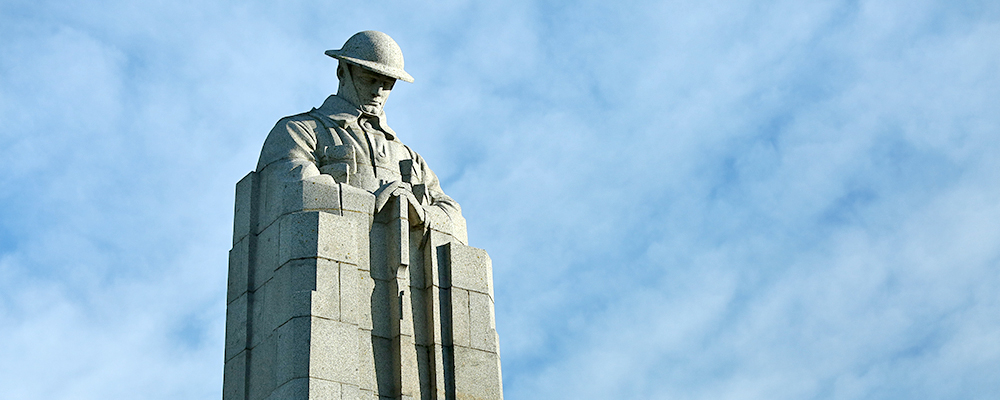
On April 24, another devastating chlorine attack hit the reformed Canadian lines west of St. Julien, allowing German forces to finally capture the village. There were over 6,000 Canadian casualties (killed, wounded, missing) in the first four days of the battle, making it a defining moment for Canadian military history. The desperate defense cemented the reputation of the Canadian Expeditionary Force and marked the horrific introduction of poison gas as a weapon. The area is commemorated by the St. Julien Canadian Memorial, dedicated to those who fell in the Second Battle of Ypres.
Back in Paris, in the afternoon of May 31, a memorial service was held to honor Private Ivor Harrington Murray. The Citizens’ Band played, prayers were prayed and hymns were sung. As more and more men from Paris fell in battle, memorials began to take the form of announcements in the newspaper, saying that “another Paris man has made the supreme sacrifice”, or words to that effect. Ivor Murray is buried in the Essex Farm Cemetery in the village of Boezinge. north of Ypres, Belgium.