
6 (now 26) Alexander Street
Corporal Clifford Naylor
Clifford Naylor was born in Bradford, Yorkshire on December 1, 1898. He was the son of George and Annie Naylor. At 10 years of age, Clifford worked as a tea boy in a coal mine. Tea boys did not actually deliver tea to miners. Instead, in addition to running errands, they might sort and clean coal, or push and pull heavy carts of coal from the coal face to the main shaft, or sit alone in pitch dark for 10 or 12 hours a day pulling a string to open ventilation doors when coal carts passed by. As he aged, Clifford got a better job delivering fish on a bicycle. He must have been glad to immigrate to Canada with his mother Annie and sister Jessie on November 14, 1915. George had emigrated from England to Canada earlier, but the family did not reconnect.
Cliff was single and living with his mother at 6 (now 26) Alexander Street when he enlisted in Toronto with No. 2 Canadian Army Service Corps (CASC) on January 30, 1917. He was working at the time as a machine hand with Penmans in Paris. After enlisting, he trained locally before boarding a transport ship to England. After arriving in England, he was taken on strength by the CASC Depot in Shorncliffe on May 14, 1917.
On October 4, 1917, Cliff transferred from the CASC to the 7th Canadian Reserve Battalion based in Seaforth, England. This was the reinforcement pool for the Princess Patricia Canadian Light Infantry (PPCLI). He spent the next five months enduring punishing infantry training, including trench-digging, night-raiding tactics, live-fire artillery drills, gas mask discipline, and bayonet combat. On March 2, 1918, now fully qualified as an infantry combat soldier, he crossed the English Channel to the massive Canadian base hub in Étaples, France. On March 16, he moved up the lines and was formally taken on strength by the PPCLI.
Five days after his arrival, the German Army launched its massive, final Spring Offensive, aiming to split the British and French armies. The Canadian Corps was rushed to critical fallback points to hold the line, thrusting Clifford directly into two distinct, high-stakes military engagements.
The first was the defence of Vimy Ridge. While Canada famously captured Vimy Ridge in April 1917, Cliff's experience there in the spring of 1918 was entirely about holding it against desperate German counterattacks. Vimy Ridge was the most strategically valuable high ground on the entire Western Front. If the Germans recaptured it, they could break through to the coast. The PPCLI was dug into the reverse slopes and trenches of the ridge, acting as an immovable wall. Vimy was subjected to continuous artillery bombardments and chemical attacks using mustard and phosgene gas. To uncover enemy intentions, the PPCLI engaged in intense night raids. Soldiers would slip across No Man's Land in total darkness to cut German barbed wire, bomb dugouts, and capture prisoners for intelligence. Because of the regiment's stubborn defense, the Germans realized Vimy was completely unbreakable and shifted their offensive focus elsewhere.
By August 1918, the tide turned, and the Allies launched the Hundred Days Offensive to win the war. The Battle of the Scarpe, just east of Arras, was officially described by Canadian Commander Sir Arthur Currie as the hardest battle in the history of the Canadian Corps. At precisely 3:00 AM on August 26, 1918, the PPCLI attacked in pitch darkness and pouring rain. To catch the Germans completely off-guard, the Canadians advanced without a long preliminary artillery bombardment, using tunnels to sneak close to the enemy lines before rushing forward. The Princess Pats were tasked with clearing a highly fortified German stronghold known as Jigsaw Wood and crossing the open Jigsaw Valley. The German defenders had placed hidden machine-gun nests and heavy artillery inside the wood. The PPCLI successfully cleared the woods and took their objectives, but they were immediately cut off on their flanks and heavily bombarded. Cliff's unit had to fight off multiple, waves of German counterattacks throughout the evening to preserve the newly won line. The action was an overwhelming strategic victory that drove the German army back eight kilometers and cracked a major defensive line. However, the cost was staggering. The Canadian Corps suffered over 5,800 casualties in just three days, with the PPCLI losing nearly 200 men during the intense fighting. It was during these two battles that Clifford Naylor was promoted to Corporal. Under the greatest of pressure, he proved he could keep his men calm, organized, and fighting under the heaviest pressure the Great War could offer.
The Princess Pats fought at the absolute tip of the spear during Canada's legendary final offensive that broke the German Army, the Hundred Days Offensive. They fought in the Battle of Amiens in August, then broke the Dorcourt-Queant Line in September. The PPCLI took massive casualties attempting to cross the dry canal bed and scale the enemy banks in the Battle of the Canal du Nord in late September. They fought in the final, exhausting push through liberated French and Belgian villages in the Pursuit to Mons in October and November, right up until the Armistice on November 11, 1918.
Because the PPCLI had gone through so much, they were not part of the long, grinding months of occupation duty in Germany. Instead, they were prioritized to go home. They spent December and January stationed near Mons, resting up. In February 1919, Clifford and the regiment traveled back to England, boarded a massive troop transport ship, and crossed the Atlantic. They arrived by train to a rapturous hero's welcome at the Exhibition Grounds in Toronto. Cliff was finally discharged on March 20, 1919.
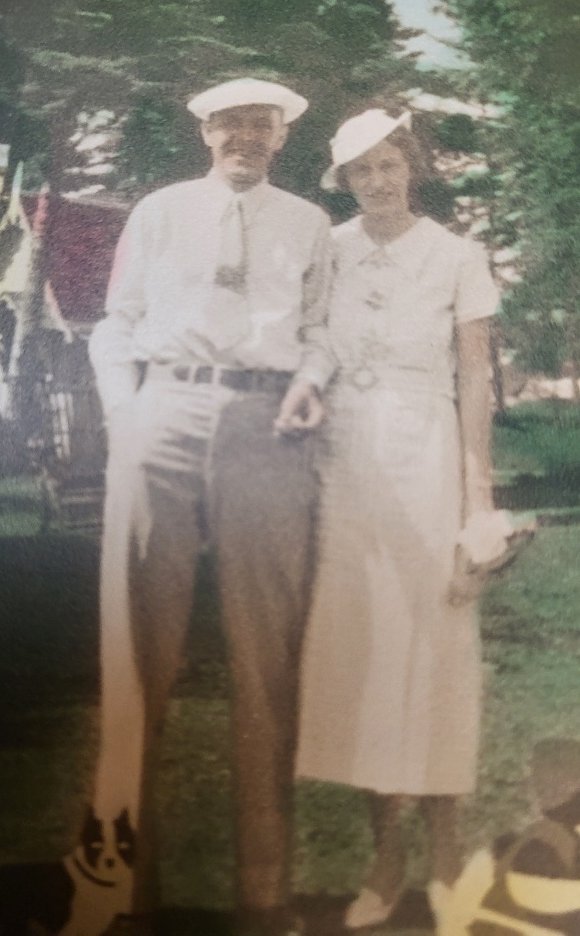
When he returned to Paris, Cliff returned to Penmans where he worked as a mechanic and purchaser for over 50 years. He married Dorothy Bradbury on July 2, 1931. They had one daughter, Carol. Cliff was a founding member of the Paris Legion and served as Zone Commander and Past President. He was also a Royal Arch Mason and received a 50-year pin. When he returned to Paris he lived first at 26 Alexander Street. Then he purchased 23 Alexander Street where he lived until his death from cancer on October 3, 1981. Corporal Clifford Naylor is buried in the Paris Cemetery.