
Guardsman Edward James Gambacorta
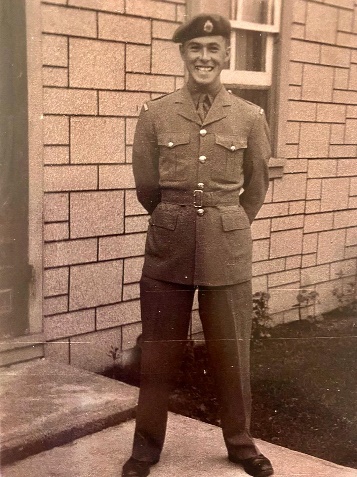
Edward “Eddie” James Gambacorta was born on March 11, 1935. He was the son of Ruth McNally and Carmine Gambacorta. Carmine was the oldest of 12 children and the only one born in Italy. Before moving to Paris, Eddy lived in Onondaga and Port Colborne. He was interested in auto mechanics and took a course at BCI. He went to school at Paris High School but quit early to work. To people who knew him as a young boy, he was never without a fishing pole in his hand. He kept up that love throughout his life, did a lot of volunteer work cleaning rivers and streams, and was involved in the inception of the Ontario Steelheaders.
At the age of 17, he started working at Penmans Limited. Margaret Varga’s sister also worked at Penmans, and Margaret and Eddie met at a dance at the Silver Centre in Princeton. Eddie and Margaret would be married on June 6, 1959, after Eddie’s military service.
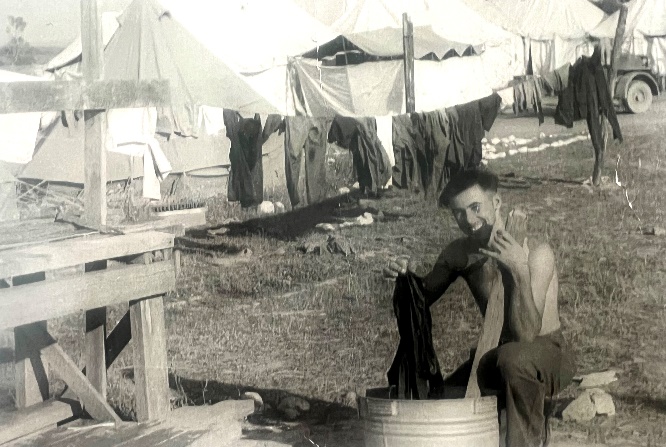
Eddy was living at 72 West River Street in Paris on December 30, 1953, when he enlisted in the Canadian Army, joining the 49th Battalion, Loyal Edmonton Regiment as a Guardsman. He completed his training at Valcartier, Quebec and was deployed to Korea in 1954 as a peacekeeper. The Loyal Edmonton Regiment itself did not deploy to Korea, but the regiment's personnel were absorbed into the newly formed 2nd Canadian Infantry Battalion, which in 1952 became the 4nd Battalion, Princess Patricia's Canadian Light Infantry (PPCLI) for service in the Korean War. The unit that absorbed the 49th Battalion's personnel was renamed "4th Battalion, Canadian Guards,” which explains Eddie’s rank of Guardsman.
The Korean War resulted from Japan’s surrender at the end of the Second World War. At that time, the North of the country was occupied by troops from the Soviet Union and the South by troops from the US. The North came to believe that they could quickly defeat the South and unify the Korean Peninsula. The United Nations formed a multi-nation force to prevent that from happening.
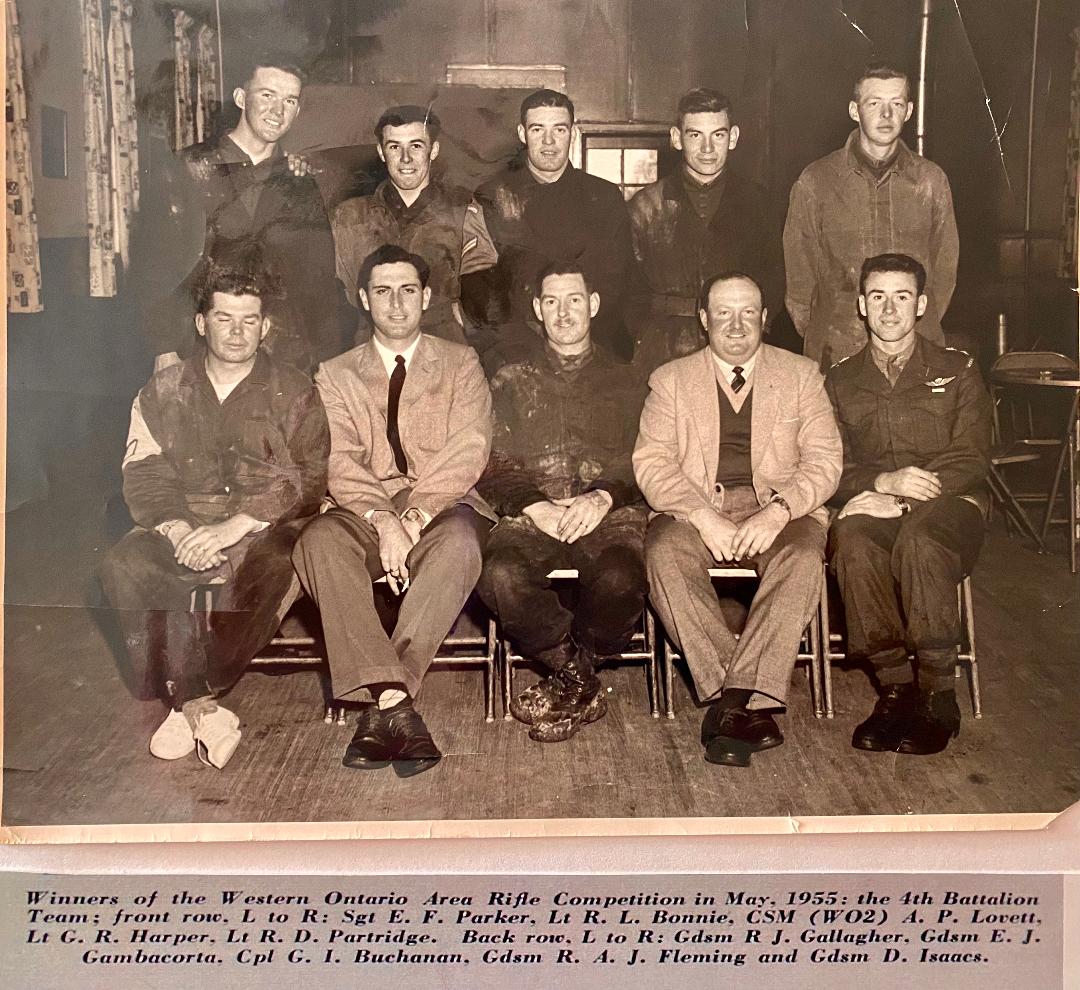
Over 26,000 Canadians served in the conflict on land, at sea, and in the air, the third highest number total of any country. 516 Canadian soldiers ultimately lost their lives. On 15 August 1950, the 2nd Battalion was created within Princess Patricia's Canadian Light Infantry (2PPCLI) as a component of the Canadian Army Special Force in response to the North Korean invasion of South Korea. The battalion landed in Korea in December and trained in the mountains for eight weeks before finally taking part in the war on 6 February, becoming a component of the 27th British Commonwealth Brigade) of the IX Corps) in the 8th US Army. 2PPCLI was the first Canadian infantry unit to take part in the Korean War.
From the summer of 1951 to the end of the war, most of the Canadian involvement centered on a small area north of Seoul "between the 38th parallel on the south and the town of Chorwon on the north. The Canadian war front was about 30 miles across and was a section of the United Nations front occupied by British Commonwealth forces. The Canadians' two main adversaries during the war were the Korean People's Army and the Chinese People's Volunteer Army. Canada's military objective was to give military support towards the resolution of the war in central Korea.
Eddie told his son Dwayne of his experiences while posted near the Demilitarized Zone (DMZ) between North and South Korea. His and a fellow soldier’s job was to watch and report North Korean soldiers penetrating the DMZ. Once, the North Koreans came so close to their camouflaged hiding Hole that Eddie was sure they would be seen and dealt with. Eddie remembered the calm feeling he had as he expected his death, but miraculously, they were not detected.
The Korean War ended in July, 1953. For his service, Eddie was awarded both the United Nations Service Medal and the Korea Medal. The battalion returned to Canada following the war and Eddie continued to serve until January 25, 1957, when he received an honorable discharge. After that he worked for a time at the Ford plant in Oakville, then at the gravel pit in Paris. Then he studied to get his Crane Operator’s licence. He worked for Nadrofsky Steel in Brantford, Arlington Crane in Burlington, and Tiger Crane in Hamilton before going into business for himself, Ed’s Crane Service in Paris.
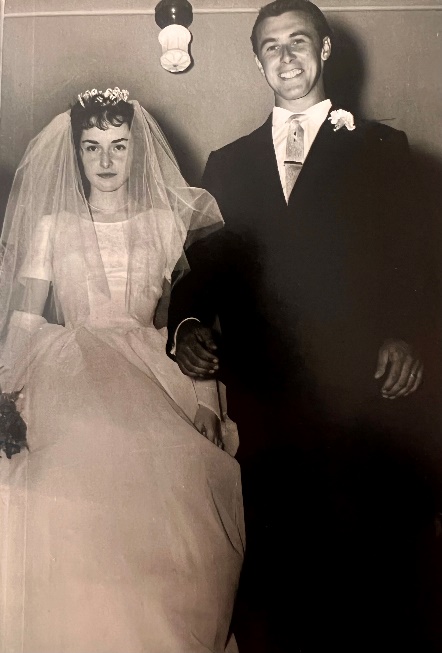
Meanwhile, Eddie and Margaret Varga married and they raised three children - Dwayne, Teri and Sue. They lived in an apartment in Brantford before moving to Paris. They moved several times in and around Paris. They rented a house on Washington Street, then bought their own home at 16 McCammon Street. They lived on a 5-acre property on Drumbo Road for 7 years and moved back to Paris to live at 54 Golf Links Road, which is now Paris Links Road.
Eddie ran a successful crane operating business in Paris for approximately a decade. Outside of work, he was also a skilled carpenter and had a passion for jiujitsu. And of course, fishing. Though he rarely spoke of his time in Korea, he had a deep sense of patriotism. He would stand with his hand on his heart whenever the national anthem played. Eddie passed away from cancer on September 19, 1990.