
Corporal Charles Ball
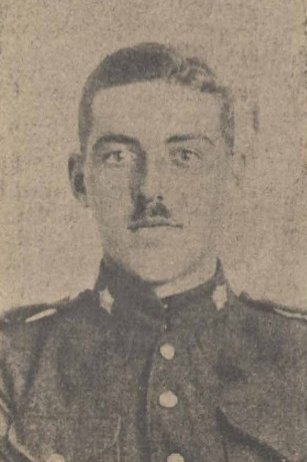
Charles Ball was born in Milton, Oxfordshire, England, the son of Mr. and Mrs. Charles Ball. At the time of his enlistment, he was employed by Isaac Stewart as a painter. He attended of St. James Anglican Church where he was a member of the men’s club. He had a younger brother William who was a member of the 215th Battalion.
He enlisted with the 4th Canadian Mounted Rifles in 1914 and left Paris with Captain William Reginald Patterson’s party on November 21 for winter camp at Toronto. He crossed to England early in 1915. In 1916, he saw considerable service in France, ending with the Battle of Sorrel, a significant but short engagement (June 2-13) where Germans attacked the Canadian-held high ground (Hill 62, Mount Sorrel) in the Ypres Salient. They inflicted heavy casualties but failed to dislodge Canadians, who eventually counterattacked to regain most lost ground, suffering heavily themselves, including the death of their commander, Major General Mercer.
It was a brutal lesson in trench warfare for the newly arrived Canadian 3rd Division, highlighting devastating artillery and mining tactics. It was a major engagement for Canadian forces, demonstrating their resilience but also the brutal reality of attritional warfare, with Canadians suffering heavily for ground that offered little strategic gain. On June 2, Charles was reported among the missing and presumed dead. He was on duty at a bombing post near Ypres, in the Zillebeke Sector, and was killed by the explosion of an enemy mine. He is remembered at the Menin Gate Memorial in Ypres, situated at the eastern side of Ypres. It bears the names of 55,000 soldiers from the British Empire who died in the Ypres Salient and have no known grave.