20 Chapel St.
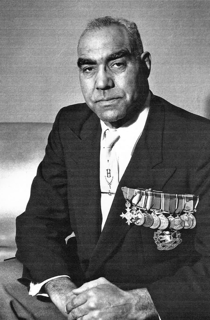
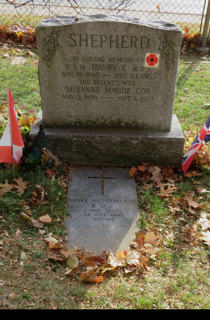
Henry Thomas Shepherd
Slavery was abolished in Canada in 1833, approximately 30 years before the American slaves were freed. American slaves thus made their way into Canada in great numbers. One such slave who arrived via the underground railroad was a woman by the name of Mrs. Shepherd who brought with her a son named John Henry. Mother and son settled in the Stewarttown area and are reputed to be the first black settlers in the district. Mrs. Shepherd kept house for Colonel Murray on his farm near Stewarttown and when she died the Colonel kept his promise to her and raised her son at his homestead, treating him as a member of the family. The Murray’s later hired an indentured servant from England, named Sarah Hartley. Sarah and John’s meeting eventually resulted in wedlock. The family initially lived on the farm, then on Trafalgar Rd across from the former school house and in 1920 the family moved into Georgetown and raised six children at the home which originally occupied 20 Chapel St.: Violet, Henry, John, Flora, Johnetta and Jessie. Each of John and Sarah’s children played their role in the community, none more so than Henry Thomas who was born on August 8, 1895 in Stewarttown. Henry worked on area farms and eventually delivered mail between Stewarttown and Ashgrove and drove Willoughby’s bus, delivering passengers to and from the Grand Trunk railway train station in Georgetown. Henry along with his father and brother John worked at Georgetown Coated Paper Mill. Henry being employed there for 49 years.
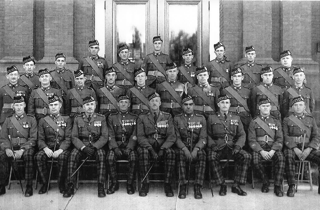
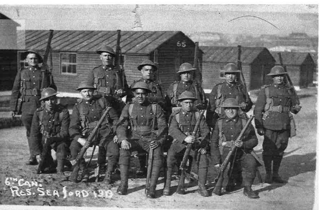
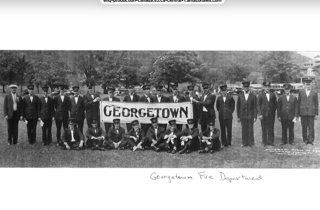
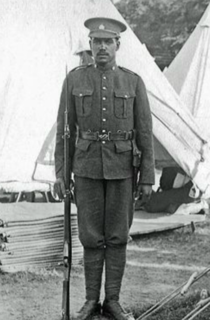
Henry enlisted with the Halton Volunteer Rifles in 1911 and went into action with the 58th Battalion in the Great War, serving all four years with the 58th. Henry one of only about 1,000 Black soldiers who served in non-segregated units and one of only 23 Black soldiers who fought in the Battle of Vimy Ridge. During his service overseas he was twice wounded… once on the battlefield in Ypres, Belgium and once at the Battle of the Somme, France. For his service he was awarded the Star and Victory medals as well as the General Service Medal. Upon his return home in 1919, he re-enlisted with the Halton Rifles militia and eventually held the rank of Regimental Sergent Major and served with the Lorne Rifles . In the 1930’s he served as Chief of Georgetown’s Volunteer Fire Brigade. With the outbreak of WW2, Henry joined up, but was unable to serve in active combat due to the injuries sustained during his WW1 service. He was given the rank of Company Sergeant Major and served at Newmarket Training Centre and was later appointed Fire Marshall there.
On August 15, 1923, Henry married Susanne Maude Cox at St. George’s Anglican Church in Georgetown. Henry and Maude raised seven daughters, their only son John dying at four years of age.
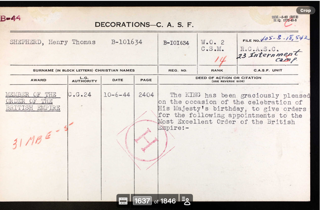
Henry was a founding member of the Georgetown Branch of the Royal Canadian Legion…an active member but declined nominations to the executive. Henry was on the King’s Honour List and was appointed a Member of the Order of the British Empire.
Henry died at Sunnybrook Hospital on July 24, 1960, and is buried at Greenwood Cemetery in Georgetown.
Truly a Canadian Hero. His story lives on.
*Taken from Halton Sketches Revisited: Historical Tales of People and Events in North Halton by John McDonald and a 2018 article in Newmarkettoday.ca.